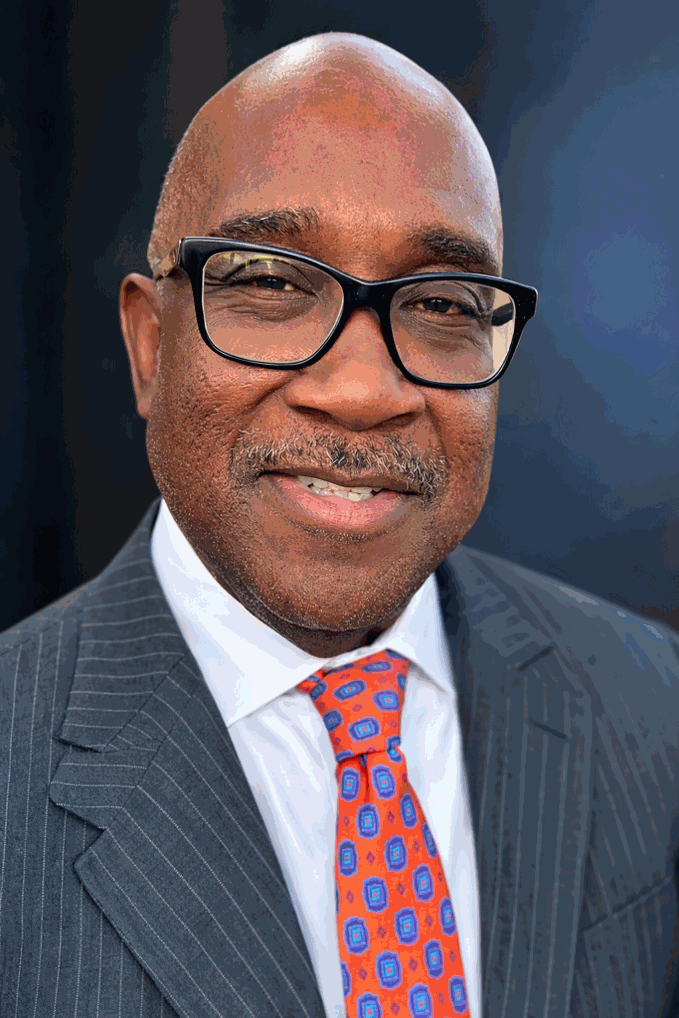
The plaque on Donovan Anderson's office bookshelf from his former co-workers at the District of Columbia Public Schools (DCPS) is gushy with accolades: "In appreciation from your colleagues and friends for your dedication, commitment, loyalty and personal integrity in advancing the needs of special education children in the District of Columbia."
The Jamaican native and 22-year resident of DC fell in love with the city when he arrived for law school and never left.
He has been advocating for DC families around special education needs for nearly twenty years, both inside and outside the system. After spending nearly ten years within the school system, Donovan has had his own successful law firm since 2000.
From Inside the System to Advocate
Anderson arrived at DCPS after graduating from Georgetown Law School. As a young lawyer developing policy and representing the school system, he learned the ins-and-outs of special education issues and loved it. "I especially loved working within the school system to help make policy decisions to better help kids."
Then came the weekend in 1999, and he now candidly recalls his dismissal after a series of articles was published examining school system failures. "I was the head that rolled for the Washington Post," he says with some chuckles. "I didn't think it would be me. On Monday, I went to work and it was me."
With the plaque and subsequent supportive Post articles about him, he feels vindicated. "I think it was the best thing that could have happened to me."
Helping One Child at a Time
Within three months of his departure, he started his own law firm specializing in representing families of children with special education needs. "Now, I can help one child at a time." And he does with little fanfare or publicity. He has been around long enough that he receives most of his business from referrals or court-ordered cases.
Anderson leaves his home in Hillcrest and heads to his private office in Anacostia at the Big Chair, where his phone rings non-stop.
"I don't think a lot of parents realize that their child is entitled to a free and appropriate education," he says, describing scenarios where children's needs are not being met by the school system, both DCPS and the charter schools.
Fighting for Change
"To this day, it never amazes me what the school system does to these children," he says, actually incredulously. When parents come to him, he takes on the challenge of solving their problems.
He describes the school system's obligation to investigate why children are regularly suspended, or coming to school every day and still failing all classes.
"I'll file a [special education due process] hearing request [with the DC Office of State Enforcement Investigative Division] against the school system, putting them on notice that they are suspending these kids 25, 30, 40 days already in the school year. [DCPS has] an obligation to investigate what is going on and how they can solve this problem."
This process, overseen by an independent contractual hearing officer, takes seventy-five days from start to finish. The first 15 days, the school system meets with the parents to try to resolve the problem. After 15 days, if the problem is not resolved, a hearing is scheduled within the next 45 days where both sides present their case.
"Invariably we'll go to a meeting and DCPS will say 'Yes, you are right, we should have done this.'"
Focus on Programming
"In the seventeen years, the school system has gotten progressively worse," he says. He attributes much of this problem to the failure of the school system to create programs that address the needs of children. His job often means finding children alternative placement outside of the city.
A huge supporter of the Prospect Learning Center for elementary children who are learning disabled, he sees no replication of that model for middle or high school students.
As for high school students who are autistic, he continues his critique on the lack of special education programming while parsing his words carefully: "[DCPS] will tell you [programs for autistic students] work, but in my professional opinion, these kids are being warehoused—they are not being taught."
Parents come to him, in his estimation, essentially because DCPS fails to create new programs for these kids. He highlights some of his cases where he finds children being warehoused because the schools lack the specific programs and staff for many of DC's children. "That's what it is: programs, programs, programs. The school system has failed to create programs."